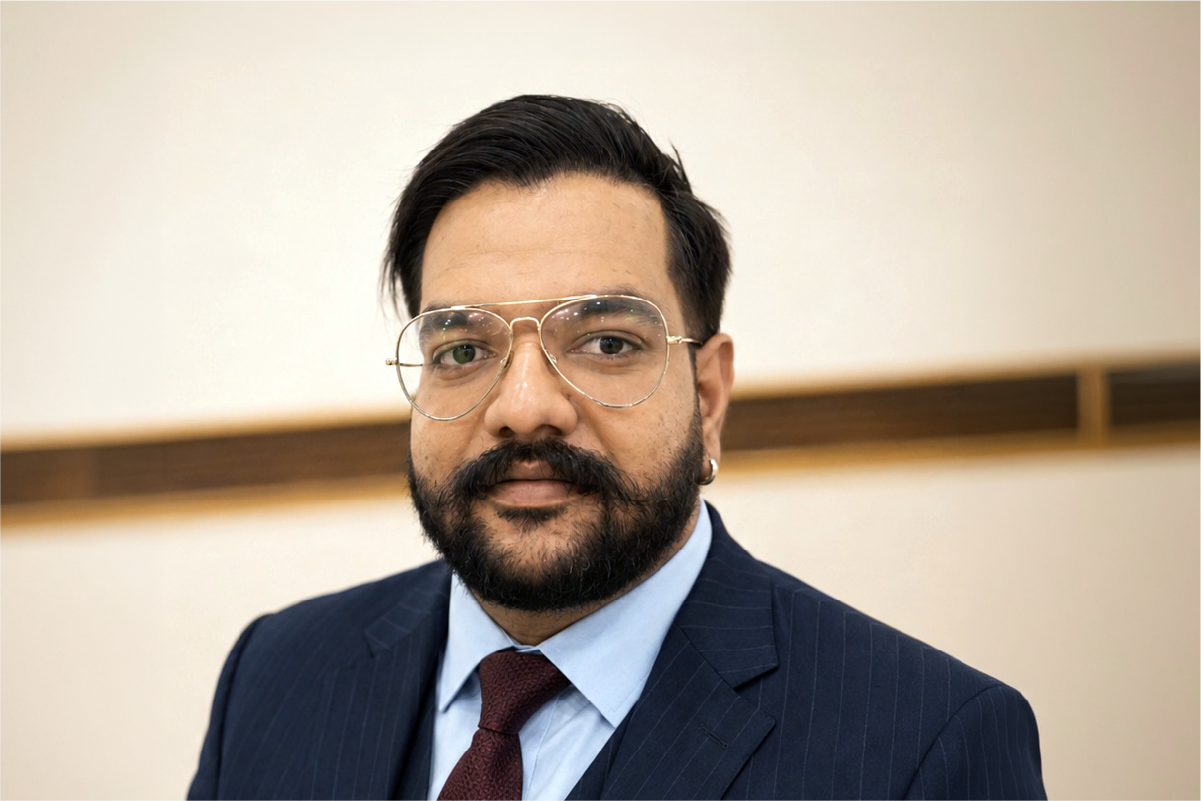
Many of the people who end up in the criminal justice system are there after making a poor choice due to an addiction or mental health issue, says Karamvir Singh. He is a staff duty counsel with Legal Aid Ontario (LAO), based in Lindsay, where his role includes both criminal duty counsel work at the local courthouse and institutional duty counsel work at the Central East Correctional Centre (CECC).
Karamvir joined LAO in June 2025. He came to Canada in 2021 to pursue a Master of Laws degree at Osgoode Hall Law School in Toronto. After graduating, he was called to the Ontario bar in 2022 and went on to work at a local law firm and open his own practice before joining LAO.
Originally from the city of Mohali in the Punjab state in India, Karamvir earned his first law degree at Panjab University after completing an undergraduate degree in sociology. He is trilingual in English, Punjabi and Hindi and worked as a criminal defense lawyer in India before coming to Canada.
Moving from Toronto to Lindsay last year, Karamvir keeps a busy schedule as a criminal duty counsel for LAO. He usually spends two days a week at the local courthouse and the remainder of the week working at the CECC in Lindsay.
Diverse role
His job contains a great deal of variety. At the courthouse, Karamvir connects with clients to assist them with their criminal legal matters. He works towards securing them bail, assists when they wish to plead guilty, and guides them on available legal recourse. Karamvir also meets with Crown counsel and other lawyers, appears before judges on clients’ behalf, and interacts with security and other court officials.
At the CECC, he meets with clients in custody to discuss their ongoing criminal charges before the courts. This work includes completing legal aid applications, bail planning, reviewing disclosure (the Crown’s evidence and information on the accused’s case) and assisting with resolutions.
Broader social issues
Social issues often overlap with criminal matters, he notes, and some clients experience multiple intersecting barriers. Someone may have a criminal charge and be homeless, for instance. These combined issues lead to greater challenges that can impede the progression of their case.
“They did something they might not have if they weren’t dealing with an addiction, for instance, and of course there are consequences, but first and foremost, I see them as community members who have a right to access to justice.”
Contributing factors such as mental health issues sometimes lead people to take actions that bring them into the criminal justice system, says Karamvir. “We see people who may be incapable of taking care of themselves, and in some cases what they really needed was to be in the care of a medical professional, but due to the lack of treatment at the right time, they ended up in a correctional facility. It’s challenging for us, but I know it’s more challenging for them.”
Making a difference
Although the role of duty counsel poses challenges, he says there are many satisfying moments. Karamvir recalls a young man who had been charged with impaired driving and was dealing with addiction issues. “I spoke to him at length last year and told him that if he didn’t nip this problem in the bud and address his drinking, in my experience, he would continue to be in and out of the justice system.”
Karamvir also gave the man pamphlets from Alcoholics Anonymous (AA) and talked to him about other resources, encouraging him to get his addiction under control. A few months ago, his former client returned to the courthouse to thank him. The man said he had made big changes in his life and proudly displayed his one-year sobriety medal from AA.
The client is doing “fantastically well” with a steady job and is permitted to drive again, Karamvir says. “I’m confident that if he doesn’t drink anymore, he will stay away from the criminal justice system and continue to be a productive member of society.”